
The Standard of The Channel
alignment · Self Awareness· Consent-
This is the standard of my channel. It is here to be met clearly, or not entered. I created this structure through my own experience, perception, discipline, and the specific demands of my channel. I am responsible for the structure that carries what comes through me. I built it to hold my own work with integrity.
The standard is rigid because the work is sensitive. This is not me pretending everyone has to define channeling this way. This is the structure I personally hold because my work requires it.
A receptive channel can receive without becoming everything it encounters. An absorptive channel takes in every feeling, projection, and pressure until the message becomes indistinguishable from the noise around it. A held channel knows what has entered, what belongs, what distorts, what clarifies, and what cannot be allowed to speak for the message.
This is the structure I believe is necessary to distinguish clear channeling from absorption, projection, or misplacement.
In my work, contact is held by three conditions: alignment, self awareness, and consent. These words are not decoration, spiritual branding, or abstract ideals placed around the work to make it feel meaningful. They are the structure that holds the channel itself.
They are the conditions that make real interaction possible because this work is built for conscious engagement, responsible interpretation, and clear entry. It is intuitive, relational, symbolic, and precise. It moves through perception, pattern, energy, archetype, memory, language, motive, emotion, and the unseen pressure beneath what is spoken.
Because of that, it asks to be met with more than impulse, assumption, hunger, or the desire to take meaning without respecting the source it came through. A flame does not become yours because you felt its heat. A message does not become yours because something in you reacted. The work has to be met through structure.
Alignment is the axis. It is the place where the self returns to integrity before interpretation begins. Alignment asks the inner structure to come back into position before anything is claimed, received, or interpreted. It asks whether you have returned to the part of yourself that can stand in truth without being pulled out of position by reaction, fear, defensiveness, performance, desire, resentment, or assumption.
Alignment recognizes where you stand. It asks whether your words, intent, attention, and behavior are moving in the same direction, or whether part of you is trying to enter through one door while another part is already reaching for what was never offered. Nothing is read clearly until the self returns to its axis.
Self awareness is the mirror. It is the willingness to reckon with what you carry before assigning meaning to what you encounter. Every person enters a message with a field around them: emotion, history, longing, grief, belief, desire, expectation, fear, hope, defensiveness, memory, wound, and personal context.
None of this makes a person wrong. It makes them human. But what is carried still has weight. What remains unnamed can lean against the message until the message appears to say what the wound, hunger, fear, or fantasy needs it to say.
Self awareness does not demand shame. It does not ask anyone to perform innocence or explain themselves into purity. It asks for honesty. It asks you to notice what is moving through you before you mistake that movement for the message itself. Self awareness reckons with what you carry because nothing is received clearly through what refuses to be named.
Consent is the threshold. It clarifies what has actually been opened. Consent knows the difference between what was offered and what was taken, what was spoken and what was presumed, connection and entitlement.
Feeling something does not mean there has been an invitation. A door being visible is not the same as a door being opened. A flame being witnessed is not the same as a flame being handed over. Consent knows what has actually been opened, and nothing sacred is owed to what was never invited.
You are being asked to recognize the structure before you engage with it. You can disagree, discern, question, reflect, and choose your own relationship to this work. The standard remains the standard.
This matters because the message and the messenger are held together here. The source cannot be erased so the insight can be extracted more comfortably. The reading cannot be severed from the integrity that carries it. The flame cannot be treated as public property simply because it casts light where someone needed warmth.
This standard exists so the work can be received without assumption, projection, extraction, or misuse. It names the container before the message is approached.
I created this standard because clarity does not survive where intent is unstable, perception is unchecked, and consent is assumed. My work comes through a source, a structure, and a lived body. The message is not an object floating without origin. It is carried through my perception, my discipline, my language, my ethics, and my channel. That means the way this space is entered matters.
I am responsible for the integrity of what I create, carry, and offer. You are responsible for how you enter this space, how you interpret what you encounter, and how you choose to engage with it.
Presence here is chosen, not owed. I do not require everyone to enter this space. I do not need everyone to resonate with my work. But if you do enter, you are responsible for how you engage.
Respect the structure, or exit it. Take responsibility for interpretation, or misunderstand on your own. Meet the work with clarity, or do not ask it to hold what you brought in distorted.
When misalignment becomes a pattern, contact does not continue. When distortion is present, it is named, not negotiated with.
This is the standard before the flame speaks.
Hello everyone, here I am. That is the first point of resonance.
If that does not resonate, do not reach past me for the message.
Engagement and interpretation-
Meaning is not a collaboration between everyone’s preferences. This is not a space where my meaning is reshaped, negotiated, softened, sharpened, or rewritten to fit someone else’s projection, emotional need, personal narrative, or desired confirmation. What is here has its own structure.
A message can be resisted through rejection, but it can also be distorted through agreement. Sometimes the distortion is not “I disagree with this.” Sometimes the distortion is “this confirms exactly what I wanted to believe.” Both can turn the work into something it was not. Agreement can still be extraction when it takes the message out of its structure and uses it to decorate a conclusion the reader had already chosen.
Sometimes a message is simply received. Like an apple falling from a tree, it lands in your hand and now you know something you did not know before. That knowledge may clarify a pattern, reveal a motive, name a consequence, or confirm something you had only sensed. But the apple still came from the tree. It carries its source, its context, and the conditions under which it was offered. Receiving it does not make it yours to reshape, weaponize, detach from its origin, or turn into a story the message never told.
This matters because insight changes the one who receives it before it ever needs to be handed to anyone else. The moment something becomes clear, responsibility begins. Sometimes that responsibility is not confrontation. Sometimes it is not announcement, explanation, proof, or persuasion. Sometimes the responsibility is to hold what was revealed quietly enough to let it change your choices.
You can disagree. You can leave. You can decide this is not for you. You can also resonate, reflect, and receive what applies. But we will not turn my work into a personal echo chamber and call that contact. Misreading is not neutral when it displaces responsibility onto perception. If something is received through projection, assumption, urgency, opposition, fantasy, or the need to be validated, what is received will not be what is here.
Insight is not always meant to be transferred. Sometimes what was revealed belongs first to your own discernment, your own boundary, your own next choice, and your own willingness to stop participating in what has now been made visible. The tree does not need to be dragged into every argument because an apple fell into your hand. The message does not need to become evidence in a conflict it never entered.
We meet what is here as it is, or we do not meet it at all.
Receive it, reject it, or leave it where it fell. Do not take the apple, rename the orchard, and vote on the roots. My meaning does not become community property because someone felt something when the fruit hit their hand or their head.

Sometimes the apple simply falls into your hand and now you know.
Not to be handed over to become consequence, yours to carry with integrity.
-
People can see something through a warped lens without lying. But when no one checks themselves, names what is happening, or respects what has actually been allowed, difference can turn into conflict, and a distorted view can start being treated like truth.
Not every difference is an attack and not every resistance is harm. Not every distorted perception is deception and not every concealed intent deserves to be mistaken for confusion.
When the field is ungoverned, difference, force, alteration, and hidden intent can begin wearing each other’s faces.
That is why each force has to be named, separated, and returned to its proper place before it is allowed to define the field. When alignment, self awareness, and consent are absent, these forces begin to intermingle.
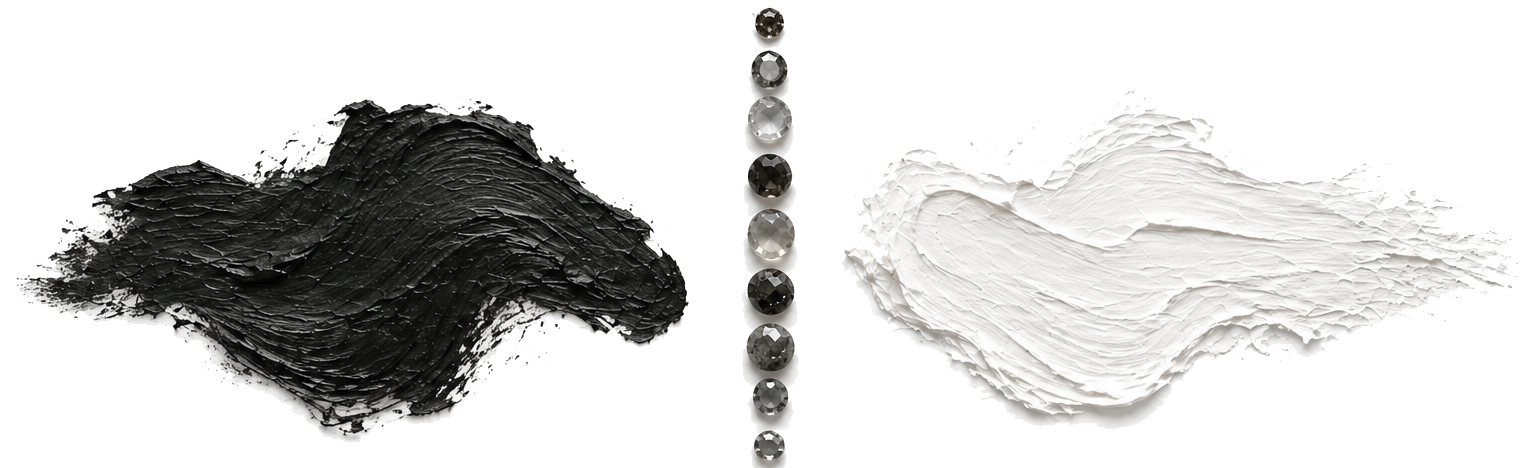
We can be different without being against each other...
Alignment exposes whether intent and action are moving together.
Self awareness separates what is yours from what is being distorted.
Consent defines what can continue knowing the field has changed.
Polarity clarifies difference, Opposition applies forcePolarity is two truths facing each other. Opposition is what happens when one begins to push. Polarity does not have to become war. Sometimes it is simply the shape of difference asking to be understood.
-
Difference is not automatically attack, and resistance is not automatically harm.
A receptive channel does not mean everything is welcomed without discernment. It means I do not reject information simply because it arrives from a force, symbol, archetype, energy, or position I am personally opposed to, unfamiliar with, or uncomfortable interpreting.
Polarity and opposition are related, but they are not the same. Polarity reveals difference. Opposition applies force. Polarity can show contrast, charge, tension, attraction, repulsion, distance, reflection, or imbalance. Opposition can resist, confront, push back, interrupt, challenge, or refuse. Both can carry information. Neither should be collapsed into fear before the message has been understood.
I do not read through a moral binary of “good” and “bad,” “light” and “dark,” “angelic” and “demonic,” “safe” and “evil.” That kind of language collapses complexity before the message has been understood. It turns perception into reaction. It makes fear the interpreter.
To know something accurately, I have to be willing to perceive it before I decide what it is. That does not mean I approve of it, invite it in without boundary, or hand it authority over the message. It means I do not burn the book because I do not like the title.
Opposition still contains information. A force can be resisted and still understood. A symbol can be uncomfortable and still meaningful. An energy can be intense without automatically being corrupt. A message can arrive through contrast without becoming an enemy.
This is why my standard matters. I can sit across from what is unfamiliar, oppositional, difficult, or charged without collapsing into fear, fascination, worship, rejection, or fantasy. I do not need to call something holy to respect what it reveals. I do not need to call something evil to create a boundary.
Discernment is an accurate relationship with what is present. It requires the ability to listen across opposition without surrendering authority.
This is where my polarity work enters the channel. Love does not begin because opposition disappears. Love begins when opposition can be met without domination, denial, or erasure. Until then, it is war.
The standard exists so I can meet contrast without becoming consumed by it, recognize opposition without making it the enemy, and receive what is present without letting it define the room.

Deception conceals intent, Distortion changes what is being perceivedDistortion is when fear paints the room red. Deception is calling the room red to everyone else without naming the fear. Distortion does not have to become deception. Sometimes it is simply the shape of a wound, fear, or desire asking to be named.
-
Distortion and deception can overlap, but they are not the same.
Distortion happens when something alters the way a message, person, or situation is perceived. Anger can distort. Fear can distort. Desire can distort. Projection can distort. Insecurity, urgency, fantasy, attachment, avoidance, and pain can all bend the lens. Distortion does not always mean someone is lying. Sometimes it means they are seeing through what they have not named.
A distorted response may sound like certainty, but certainty does not make perception accurate. Someone may feel activated and decide a message is wrong, harmful, targeted, threatening, or offensive before they have actually examined what was said. Their reaction may be real, but that does not mean their interpretation is true.
Deception is different. Deception begins when intent is concealed, misrepresented, or performed around. It includes withheld intent, misrepresented presence, emotional positioning used to gain access, and ambiguity used to avoid accountability. It can look like interest, admiration, curiosity, concern, resonance, or connection, but if the presence and the intent do not match, the interaction is not clear.
Distortion may reveal what bent the lens. Deception hides the hand holding it.
That distinction matters.
If someone feels angry and says, “This is bullshit,” that may be distortion. Their perception is being filtered through anger, fear, projection, or pain. But if they take that reaction and present it to others as objective truth, concern, warning, or moral authority while concealing the personal reaction underneath it, deception enters the field.
Distortion can reveal fear, desire, projection, avoidance, insecurity, urgency, fantasy, or misalignment. I do not reject information simply because it arrives distorted. I read distortion for what it exposes. If the lens is warped, I still want to know what bent it.
But distortion does not create stable contact on its own. It has to be named. It has to be understood as distortion, not mistaken for the whole truth.
False pretense is connection presented without its truth. When something enters the space wearing one face while carrying another intent, what appears as engagement becomes unstable. I do not build connection on unclear intent. I do not call instability intimacy. I do not treat hidden motives as harmless because they are wrapped in interest, admiration, curiosity, emotion, or spiritual language.
A red flag does not become a rose because someone sprinkled moon water on it.
Distortion can be read and named to reveal where truth is being displaced. Deception must be recognized because hidden intent changes the field of engagement.
Alignment exposes whether intent and action are moving together.
Self-awareness separates what is yours from what is being distorted.
Consent defines what can continue knowing the field has changed.

Example Scenario
You text someone, “Hey, that bothered me.” They reply, “Wow. I guess I’m just a horrible person then.” Now you are annoyed, because girl…that is not what you said.
-
Am I dealing with a difference, or did they turn the difference into a fight? Am I still seeing clearly, or am I so irritated that now I want to write a 47 page emotional dissertation called The Audacity Volume One?
Are they confused, or are they making my boundary sound like an attack so they do not have to answer it? Do I need to prove my point to the whole village, or can I just notice what happened and choose what to do next?
-
Polarity: We are not seeing this the same way.
Opposition: Now the difference has become a fight.
Distortion: Feelings are changing how someone sees what happened. Anger hears a boundary as an attack, or we want this to be okay so badly that we call a red flag a misunderstanding. Hurt makes every word sound crueler than it was. Attachment makes behavior softer than it actually is.
Deception: Your face gets put on their reaction and called your intention, then that gets presented as the truth, making their distorted reception impersonate you.
The Woven Grey: Can we name what is actually happening before we decide what this becomes? No, both sides are not the same. No, not everyone has a point, and no, we do not blur the truth so no one feels uncomfortable. The woven grey is the pause where we sort out what is real, what is felt, what is assumed, and what is allowed.
-
You do not have to fight the clown in the parking lot. Sometimes the clearest answer is “Oh. This is how they handle accountability.” And then you let that be the answer instead of begging the circus to become a library.

What This Work Is
A disciplined reading of what is present in reality.-
This work is a structured reading of pattern, energy, motive, distortion, and consequence. It reads beneath presentation and pays attention to what is moving under the surface: where the energy is going, what keeps repeating, what is misaligned, what is being avoided, and what the surface explanation cannot hold.
This work may include pattern recognition, energetic reading, symbolic interpretation, tarot and archetypal systems, motive and distortion analysis, consequence and relational patterning and language that names what is present beneath performance.
Archetypes, tarot, and symbolic systems are tools in this process. They organize, compress, and communicate information. They are not the source of the discernment. This is not bibbidi-bobbidi-boo spirituality, haunted house theater, or symbolism pretending it outranks the person reading it. The cards are not the boss. The archetype is not the manager. The source is my intelligence. My perception, my discipline, my discernment, and the structure I use to interpret what comes through.
What I Am Responsible For
I am responsible for the coherence of my own nervous system. I regulate like a grown adult, not like a windchime in a hurricane. If the message is intense, I hold my position without turning the room into a spectacle. If someone brings chaos to the door, I do not hand it a name tag and invite it to sit down.
I am responsible for the integrity of this space. I keep the channel structured, intentional, and clear. Not spiritually musty. Not energetically sticky. Not cluttered with abandoned hot takes, projection confetti, or emotional graffiti. If something enters this room, it is here because I have allowed it, named it, or addressed it.
I am responsible for the clarity of the message. I do not bring a fog machine to a reading and call it mysticism. My focus is direct transmission: what is present, what is moving, what is hidden, what is repeating, and what needs to be named without being dressed up as vague spiritual Mad Libs.
I am responsible for the accuracy and ethics of my work. My readings are held to an internal standard aligned with my values, experience, discernment, and structure. I do not confuse intensity with hostility, softness with honesty, or mystery with “I have no idea what I’m saying but the moon is involved.”
I am responsible for the boundaries. This space has structure. Not suggestions. Not decorative guidelines. Structure. If you run into a wall, that is how you know it works. We gon’ learn physics today.

What This Work Is Not
here to confuse a good explanation with honest behavior.-
This work does not exist to become whatever someone needs it to be in order to avoid themselves.
It does not offer prediction as entertainment, mind reading, narrative collaboration, emotional extraction, validation without responsibility, spiritual bypassing, personal fantasy dressed as interpretation, access beyond what has been clearly offered, meaning without alignment, comfort without reflection, or certainty without accountability.
This work is not where someone presses the button for reassurance and gets a message designed to keep them comfortable. It is not a fog machine for avoidance. It is not here to decorate a personal narrative that refuses to examine itself.
This work does not reshape itself around projection, fantasy, urgency, or a version of reality built to accommodate avoidance. If someone is seeking meaning without responsibility, this container will not serve them. The message is not here to become a costume for the story someone already decided to wear.
What I Am Not Responsible For
I am not responsible for projections, assumptions, invented interpretations, or narratives created to avoid personal accountability. If someone writes a storyline without my signature, I am not signing it retroactively.
I am not responsible for reducing truth so it feels easier to receive. If reality feels spicy, I am not changing the seasoning. The message does not become inaccurate because it has flavor, heat, or consequence.
I am not responsible for altering my tone, clarity, or authority to accommodate someone else’s preference for a softer delivery. My voice is part of the channel. I do not turn directness into cotton candy so it can dissolve before it has to be understood.
I am not responsible for treating collective messages as personally targeted unless that has been explicitly stated. Resonance means something applies. It does not mean it was aimed. If the shoe fits, notice the shoe — but do not act like I measured your foot in the back room.
I am not responsible for carrying the emotional fallout of someone else’s misreading. Projection does not become mine because someone launched it in my direction. I do not run a recycling center for misplaced emotions, and I am not the landfill for interpretations created outside the context of the message.

Self Audit
I hold myself to the structure first, Then I ask you to meet it too.example Questions to Ask Myself While Channeling-
Am I stepping into someone else’s expectation of the message, or am I remaining in the structure of my own channel?
Am I allowing the message to move through my intelligence, my language, and my discernment, or am I adjusting myself to fit what someone else expects a reader to sound like?
Am I reading what is present, or trying to make the message more acceptable, palatable, dramatic, gentle, or familiar?
Am I honoring the messenger as part of the message, or am I separating myself from the channel to make the transmission easier for someone else to consume?
Am I speaking from the place in me that knows, or from the part of me that wants the message to land without resistance?
Am I letting the message arrive through my actual voice, or through an imagined version of what “spiritual” is supposed to sound like?
Am I still in coherence with myself as the message moves through, or am I being pulled into performance, appeasement, or someone else’s comfort?
Closing line option:
If someone does not want the messenger, they do not want my message. They want access without the source, and that is not alignment.
-
Am I recognizing what is mine, what is theirs, what is collective, and what is projection trying to pass as truth?
Am I allowing my lived experience to inform my perception without letting it become the whole interpretation?
Am I feeling the message through my body and intelligence, or am I becoming tangled in someone else’s reaction to it?
Am I naming what I notice before I assign meaning to it?
Am I distinguishing between what I am receiving, what I am recognizing, and what I am personally responding to?
Am I letting my intelligence organize the message, or letting emotional pressure rush ahead and call itself clarity?
Am I aware of where my history gives me language without letting it rewrite what is actually present?
Self awareness keeps my channel from becoming a mirror for someone else’s projection or a stage for my own unexamined material. The message moves through me, but it does not become whatever pressure, history, or reaction wants it to be.
-
Am I engaging with what has actually been opened, or reaching into something that has only become visible?
Am I honoring the difference between what can be perceived, what has been invited, and what is appropriate to speak or respond to?
Am I allowing the message or response to stop where consent stops, even when more can be sensed?
Am I keeping the message and response inside the context they arrived in, or extending them beyond what has been clearly opened?
Am I receiving what is present without assuming every visible layer belongs in the transmission or the response?
Am I respecting the boundary between collective insight, personal access, private depth, and direct engagement?
Am I letting the channel remain precise by refusing to treat visibility, reaction, or contact as permission?
Consent keeps depth from becoming intrusion. Just because something can be sensed, seen, or responded to does not mean it has been opened, invited, or entrusted to the message.
example Questions to Ask Yourself Before the Message Becomes Meaning-
Nothing is read clearly until the self returns to its axis.
Am I clear about my intention for being here?
Am I entering this space to receive what is present, or to make the message confirm what I already wanted to believe?
Am I here to understand, or to collect evidence for a narrative I already brought with me?
Am I engaging from integrity, or am I reacting from pressure, fear, desire, defensiveness, convenience, or emotional charge?
Am I aware of where I stand before I begin interpreting what I encounter?
Am I saying one thing while wanting, expecting, or moving toward something else?
Am I letting my words, intentions, attention, and behavior move in the same direction?
Am I approaching the message as it is, or bending it toward what I want it to mean?
Am I interpreting from my axis, or from emotional displacement?
Am I standing in truth, or adjusting myself around what feels safest, easiest, most flattering, or most comfortable?
Am I asking the message to stabilize something I have not clarified within myself?
Am I receiving the work, or making the work responsible for my instability?
Am I able to notice my reaction without turning it into interpretation?
Am I willing to let the message be what it is, even if it does not match my preferred outcome?
Alignment does not ask whether the message feels right, whether I feel certain, or whether the reading confirms what I wanted. It asks whether my intention, attention, words, and behavior are moving together before interpretation begins.
-
Nothing is received clearly through what refuses to be named.
Am I aware of why I am here?
Am I seeking understanding, confirmation, relief, direction, validation, closure, or control?
Am I bringing grief, fear, longing, defensiveness, expectation, hope, resentment, desire, memory, or personal history into the way I receive this?
Am I naming what I am carrying before I assign meaning to what I encounter?
Am I hoping this message means something specific?
Am I afraid this message means something specific?
Am I reading what is present, or reading through what I need, fear, expect, or want confirmed?
Am I assigning something to the message that may actually belong to me?
Am I turning my emotional reaction into evidence?
Am I mistaking resonance for ownership?
Am I mistaking discomfort for proof that the message is wrong?
Am I asking this message to answer something it was not offering?
Am I making the work responsible for feelings, memories, or meanings I brought with me?
Am I willing to pause before deciding what this means?
Am I refusing to name something in myself before I interpret what is here?
Self-awareness does not ask whether I am wrong, innocent, good, or bad. It asks whether I have named what I am carrying before I let it interpret the message for me.
-
What has actually been opened, offered, invited, or agreed to here?
What has not been opened, offered, invited, or agreed to?
Am I responding to what was given, or reaching beyond it?
Am I treating attention, resonance, curiosity, emotional pull, admiration, or activation as permission?
Am I confusing visibility with access, witnessing with ownership, or connection with entitlement?
Am I assuming intimacy because something moved me?
Am I trying to enter a depth that has not been mutually opened?
Am I asking the work, the reader, or the channel for access beyond what was clearly offered?
Am I receiving what was given, or trying to turn it into something more?
Am I clear on where the boundary is, or am I using feeling as permission to cross it?
Consent does not ask whether I feel something. It asks whether access has actually been given.